
I am ending this year in my apartment in Ithaca, New York, where I am currently pursuing my Master’s degree at Cornell. I can remember writing my top 10 goals at the start of 2025, on New Year’s Day, and one of them was attending this university. While I’ve been extremely grateful for the opportunity to be here, it’s also come with its own set of challenges, including: having to contend with studying and working at a university that is feeding into our global imperialistic system (re: see Cornell accepting a compact with the Trump administration and attacking workers and students alike for pro-Palestine activism), accepting solitude and leaving the community I built in the Bay Area, and discovering my own place in the isolating environment of academia.
In Urdu, there’s a word, tanhai, that describes the deep-seated feeling of solitude – the kind of loneliness that feels like a stone on your heart. It’s something deeper than just being alone. To me, it’s hope gone missing.
There’s a poem, “Tanhaa’i” by a Pakistani-Punjabi writer Faiz Ahmed Faiz, that perfectly encapsulates this feeling:
phir ko’ii aayaa, dil-e-zaar! nahiin, ko’ii nahiin;
raah-rau hogaa, kahiin aur chalaa jaaegaa.
dhal chukii raat, bikharne lagaa taaron kaa ghubaar,
larkharaane lage aiwaanon mein khwaabiida charaagh,
so ga’ii raasta tak takke har ek rah guzaar;
ajnabi khaak ne dhundlaa diye qadmon ke suraagh.
gul karo shamiin, barhaa do mai-o-miinaa-o-ayaagh,
apne be khwaab kivaaron ko muqaffal kar lo;
ab yahaan ko’ii nahiin, ko’ii nahiin aayega!
Note: Translation by Agha Shahid Ali
Solitude
Someone, finally, is here! No, unhappy heart, no one –
just a passerby on his way.
The night has surrendered
to clouds of scattered stars.
The lamps in the hall waver.
Having listened with longing for steps,
the roads too are fast asleep.
A strange dust has buried every footprint.
Blow out the lamps, break the glasses, erase
all memory of wine. Heart,
bolt forever your sleepless doors,
tell every dream that knocks to go away.
No one, now no one will ever return.
Faiz describes the hope you feel, in the midst of your solitude, that someone or something will see you. Someone or something will render you visible, and when that hope doesn’t come true, it feels like the biggest betrayal you could face.
Solitude convinces you to think that it will remain, that no one or nothing will ever stay. You’ll always just hear someone moving from outside the door, but they won’t come inside. You can hear their footsteps in the corridor, but when you follow them, there is nothing; even their footprints are erased.
This year, I have returned to that solitude after months of not feeling it. I am yearning and grieving for something that I’ve never had.
Before I moved to the East Coast, I was so content and satisfied with my life. My friends, my community, and my organizing were enough to fill the holes of my solitude. But when I came here, and that was taken from me, I began to long again. There are moments, even now, when I am walking home from class or organizing with my union, that I feel okay. Solitude, however, is stubborn and always finds its way back to me.
Through my (occasionally public) mental breakdowns, I have learned not to be embarrassed for feeling. Emotions are integral to our experiences, and with that, so is hope.
I am recognizing that the love I want is something I deserve, and while it may feel out of reach at times, I strongly believe I won’t have to compromise my values for the right person (or group of people).
Faiz wrote,
“The heart has not lost hope, but just a fight that is all. The night of suffering is long, but it is just a night after all.”
This night is long, but it is temporary. So despite it all, I’ll carry that hope because it’s what we do and it’s how we win our fights.
One of the ways I maintain my hope is through organizing. We’ve been showing up for Palestine, defending international workers, and fighting for our rights to free speech. While the classes I have been taking have taught me so much about the theoretical and research aspects of the labor movement, in-person organizing has allowed me to directly take action. I know that in 2026, we are only going to get stronger as workers and as students.
Now on to some of my favorite books and quotes from this year:
Books
“I feel that, as – ‘stone walls do not a prison make, Nor iron bars – a cage’ so peril, loneliness, an uncertain future, are not oppressive evils, so long as the frame is healthy and the faculties are employed; so long, especially, as Liberty lends us her wings, and Hope guides us by her star.”
“I believe in some blending of hope and sunshine sweetening the worst lots. I believe that this life is not all; neither the beginning nor the end. I believe while I tremble; I trust while I weep.”
“Human beings have a remarkable ability to accept the abnormal and make it normal.”
“Well, you’re not alone anymore, buddy,” I say. “Neither of us are.”
“At that moment, the power of reading made itself clear and real to me. If I could see the words, then no one could control them or what I got from them. They couldn’t even know if I was merely seeing them or reading them, sounding them out or comprehending them. It was a completely private affair and completely free and, therefore, completely subversive.”
“Clarissa had a theory in those days – they had heaps of theories, always theories, as young people have. It was to explain the feeling they had of dissatisfaction; not knowing people; not being known. For how could they know each other? You met every day; then not for six months, or years. It was unsatisfactory, they agreed, how little one knew people. But she said, sitting on the bus going up Shaftesbury Avenue, she felt herself everywhere; not ‘here, here, here’; and she tapped the back of the seat; but everywhere. She waved her hand, going up Shaftesbury Avenue. She was all that. So that to know her, or any one, one must seek out the people who completed them; even the places. Odd affinities she had with people she had never spoke to, some women in the street, some man behind a counter – even trees, or barns. It ended in a transcendental theory which, with her horror of death, allowed her to believe, or say that she believed (for all her scepticism), that since our apparitions, the part of us which appears, are so momentary compared with the other, the unseen part of us, which spreads wide, the unseen might survive, be recovered somehow attached to this person or that, or even haunting certain places, after death. Perhaps – perhaps.”
“The world is full of painful stories. Sometimes it seems as though there aren’t any other kind and yet I found myself thinking how beautiful that glint of water was through the trees.”
“Your teachers Are all around you. All that you perceive, All that you experience, All that is given to you or taken from you, All that you love or hate, need or fear Will teach you— If you will learn.”
“They start unions to fight for their rights, a voice, workplace democracy, and greater dignity and freedom. Organizing enables workers to define themselves in terms of their humanity, not in terms of their productive value to a corporation.”
“The work we are currently doing wouldn’t be possible without past efforts, and our current efforts have the potential to help pave the way for future liberation beyond our current comprehension of what is possible. In spite of aggressive union busting and the occasional defeat, organizing attempts – just like those of Zola’s miners – plant seeds that will germinate, and one day, overturn the earth.”

“I will remember those who have been forgotten.”
“What if everybody is frightened, and nobody has the answers?”
“Each generation must discover its mission, fulfill it or betray it, in relative opacity.”
“The Third World must start over a new history of man which takes account of not only the occasional prodigious theses maintained by Europe but also its crimes, the most heinous of which have been committed at the very heart of man, the pathological dismembering of his functions and the erosion of his unity, and in the context of the community, the fracture, the stratification and the bloody tensions fed by class, and finally, on the immense scale of humanity, the racial hatred, slavery, explotiation and, above all, the bloodless genocide whereby one and a half bullion men have been written off.”

“My point is: What if we don’t treat emotion as matter? What if we treat it as energy? Not as a poison, limited in its potential, but as a power source, infinite in its potential?”

“Love was a room that appeared when you stepped into it.”
“It feels so American to discount dreams because they’re not built of objects, of things you can hold and catalogue and then put in a safe. Dreams give us voices, visions, ideas, mortal terrors, and departed beloveds. Nothing counts more to an individual, or less to an empire.”
“Practicing mutual aid is the surest means for giving each other and to all the greatest safety, the best guarantee of existence and progress, bodily, intellectual and moral.”
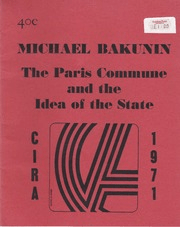
“I am an impassioned seeker of the truth, and as bitter an enemy of the vicious fictions used by the established order—an order which has profited from all the religious, metaphysical, political, juridical, economic, and social infamies of all times—to brutalize and enslave the world. I am a fanatical lover of liberty. I consider it the only environment in which human intelligence, dignity, and happiness can thrive and develop. I do not mean that formal liberty which is dispensed, measured out, and regulated by the State; for this is a perennial lie and represents nothing but the privilege of a few, based upon the servitude of the remainder. Nor do I mean that individualist, egoist, base, and fraudulent liberty extolled by the school of Jean Jacques Rousseau and every other school of bourgeois liberalism, which considers the rights of all, represented by the State, as a limit for the rights of each; it always, necessarily, ends up by reducing the rights of individuals to zero…“that liberty of each man which does not find another man’s freedom a boundary but a confirmation and vast extension of his own; liberty through solidarity, in equality. I mean liberty which will shatter all the idols in heaven and on earth and will then build a new world of mankind in solidarity, upon the ruins of all the churches and all the states.”

“Ask for work. If they don’t give you work, ask for bread. If they do not give you work or bread, then take bread.”
“The demand for equal rights in every vocation of life is just and fair; but, after all, the most vital right is the right to love and be loved.”
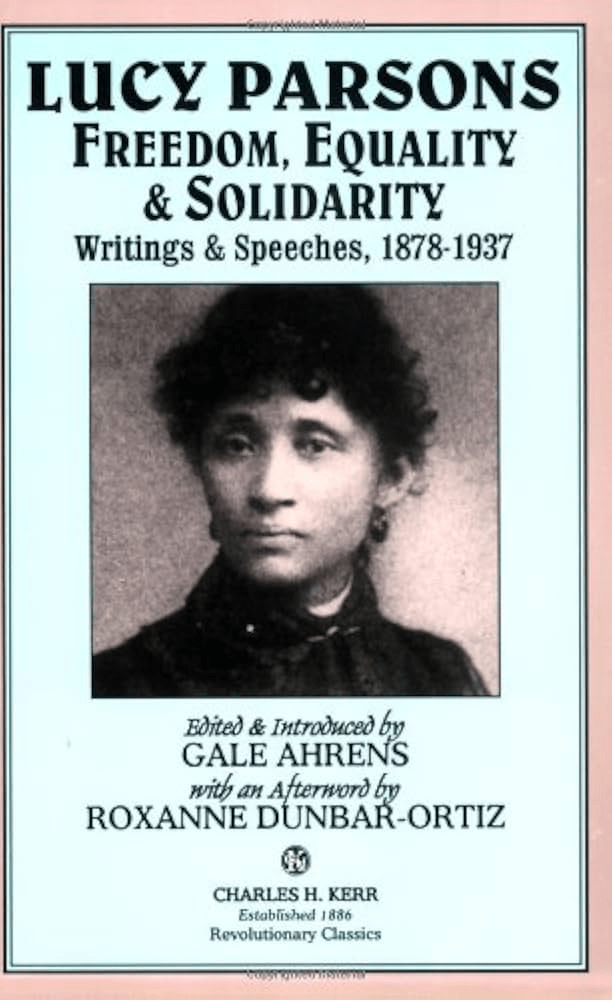
“We mean that the land shall belong to the landless, the tools to the toiler, and the products to the producers.”
“The involuntary aspiration born in man to make the most of one’s self, to be loved and appreciated by one’s fellow-beings, to ‘make the world better for having lived in it,’ will urge him on to nobler deeds than ever the sordid and selfish incentive of material gain has done.”

“It is our suffering that brings us together. It is not love. Love does not obey the mind, and turns to hate when forced. The bond that binds us is beyond choice. We are brothers. We are brothers in what we share. In pain, which each of us must suffer alone, in hunger, in poverty, in hope, we know our brotherhood. We know it, because we have had to learn it. We know that there is no help for us but from one another, that no hand will save us if we do not reach out our hand. And the hand that you reach out is empty, as mine is. You have nothing. You possess nothing. You own nothing. You are free. All you have is what you are, and what you give.”
“There’s a point, around age twenty, when you have to choose whether to be like everybody else the rest of your life, or to make a virtue of your peculiarities. Those who build walls are their own prisoners. I’m going to go fulfil my proper function in the social organism. I’m going to go unbuild walls.”
“You cannot buy the Revolution. You cannot make the Revolution. You can only be the Revolution. It is in your spirit, or it is nowhere.”
Articles:

TV/Films
Speeches
 Saumya Monga